
















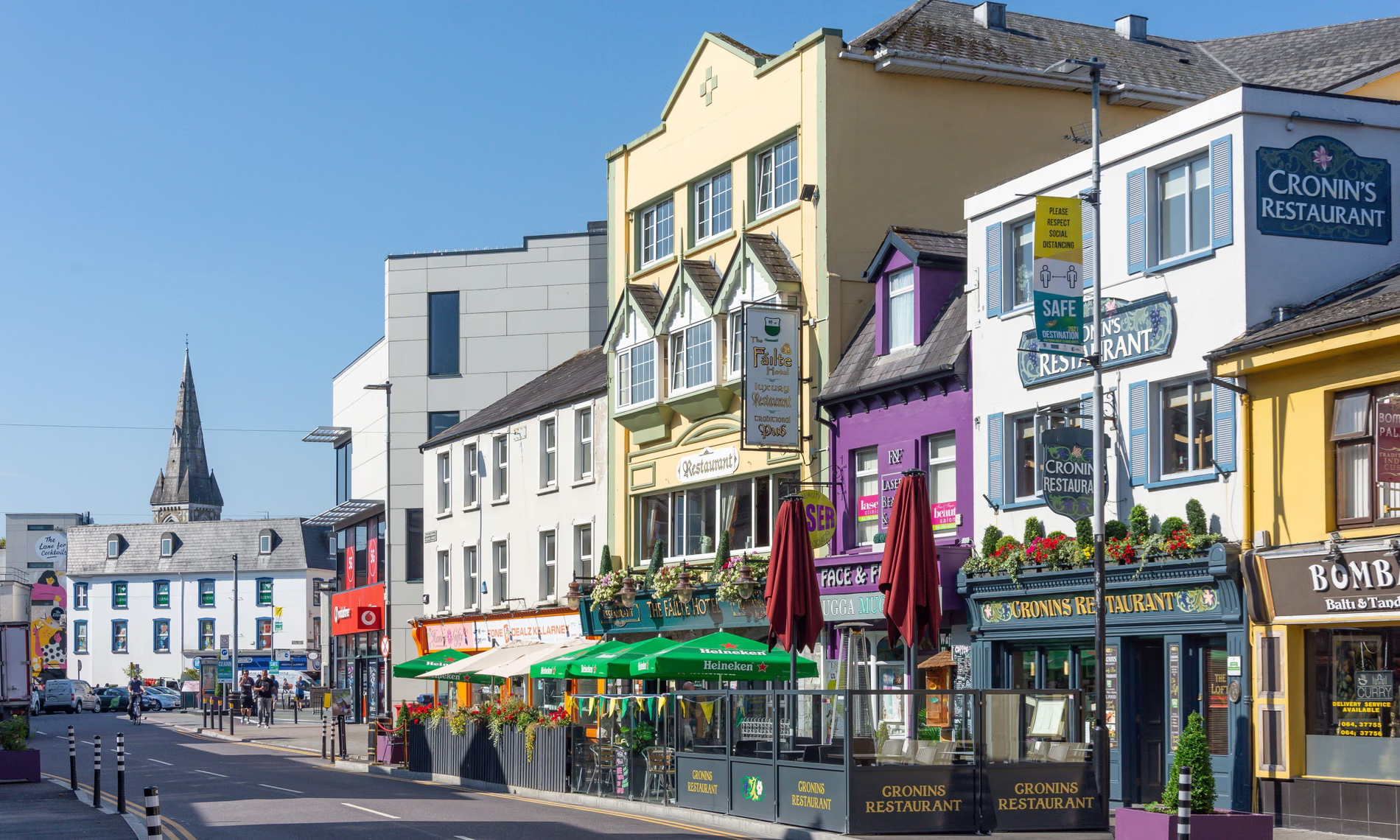
In a bold step towards tackling single-use waste, the Irish town of Killarney has made global headlines by becoming the first town in the world to ban disposable coffee cups entirely. What might sound like a small, symbolic change is in fact a powerful signal of how local action can drive real progress towards sustainability.
The decision reflects a growing recognition that convenience culture has come at a significant environmental cost, and that meaningful change often starts at community level.
Why single-use coffee cups are such a problem
Disposable coffee cups are often misunderstood. Despite appearing to be made of paper, most are lined with plastic, making them extremely difficult to recycle. As a result, billions of cups each year end up in landfill or as litter, breaking down into microplastics that persist in the environment for decades.

In tourist towns like Killarney, the impact is amplified. High footfall, takeaway culture, and seasonal surges in visitors can overwhelm waste systems, leaving streets, waterways, and green spaces under constant pressure.
Local authorities and residents increasingly recognise that recycling alone cannot solve the problem. Reducing waste at source is far more effective.
How the ban works in practice
Rather than relying on voluntary measures, Killarney’s approach is clear and decisive. Single-use coffee cups are no longer permitted for takeaway drinks within the town. Instead, cafés and coffee shops have transitioned to reusable alternatives.
Customers are encouraged to bring their own cups, use deposit-return reusable cups provided by businesses, or enjoy drinks in reusable containers on site. The system is designed to be practical, inclusive, and easy to adopt, rather than punitive.
Crucially, this change has been driven with strong community backing. Local businesses, residents, and environmental groups worked together to design a solution that fits the town’s character and economy.
A shift in mindset, not just policy
One of the most important outcomes of the ban is cultural rather than regulatory. By removing disposable cups from everyday life, the town has challenged long-held assumptions about convenience.
What was once considered normal – grabbing a drink and discarding the cup minutes later – is now viewed as unnecessary waste. Reusable cups have quickly become the default, not the exception.
This shift shows how behaviour can change rapidly when sustainable choices are made visible, supported, and normalised.
What this means for sustainable cities and communities
Killarney’s move aligns closely with global goals around sustainable cities, responsible consumption, and climate action. It demonstrates that towns and cities do not need to wait for national legislation to take meaningful action.
Key lessons for other communities include:
- Local leadership matters – councils and communities can act decisively when national policy lags
- Simple systems work best – clear rules and practical alternatives encourage adoption
- Community buy-in is essential – collaboration builds trust and long-term success
- Tourism and sustainability can coexist – environmental leadership can enhance, not harm, local reputation
Far from deterring visitors, the ban has positioned the town as a leader in environmental responsibility, reinforcing its identity as a place that values its natural surroundings.
Implications for SMEs and local businesses
For small and medium-sized businesses, changes like this can initially feel daunting. However, the experience in Killarney shows that sustainable practices can strengthen customer relationships rather than weaken them.
Businesses benefit from:
- Reduced spending on disposable packaging
- Stronger alignment with customer values
- Clear sustainability messaging
- A level playing field where all businesses operate under the same rules
In many cases, customers actively support businesses that take visible steps to reduce waste, especially when those steps are part of a wider community effort.
Could this happen elsewhere?
The success of the ban has sparked conversations well beyond Ireland. Other towns and cities are watching closely, assessing whether similar measures could work in their own contexts.
While every place has different challenges, the core principle is universal: reducing waste at source is one of the most effective ways to cut environmental impact. As pressure mounts on governments to address plastic pollution and climate change, local initiatives like this may become increasingly common.
What was once seen as radical may soon be seen as responsible governance.
A glimpse of the future
Killarney’s coffee cup ban offers a glimpse into a future where sustainability is built into daily life, not treated as an optional extra. It shows how bold, well-designed local action can inspire wider change and challenge the status quo.
For communities, businesses, and policymakers alike, the message is clear: meaningful progress does not always require complex technology or sweeping national reform. Sometimes, it starts with something as simple as rethinking the cup in your hand.

مؤلف: هدف التنمية المستدامة: صفر
مدير الموقع





 English
  French
  Arabic
  German
  Spanish